Before You Can Come Home, You Have to Let It All Go

There's a certain kind of anime fan moment that doesn't hit you during the big battle scene or the dramatic confession. It hits you somewhere quieter — when a character finally stops clinging. When they exhale. When they put something down they've been carrying so long it practically became part of their skeleton. And somehow, that's the scene you think about for weeks.
This site is built on the idea of reaching out, of holding on, of finding your way back to somewhere that matters. But here's the thing the best anime keeps reminding us: sometimes you can't actually get home until you're willing to leave. Not just physically — but emotionally, psychologically, spiritually. The attachment itself becomes the wall.
Let's talk about the characters who figured that out, and what it cost them.
Natsume Takashi and the Weight of Belonging to No One
Natsume's Book of Friends is slow television in the best possible way. Nothing explodes. Nobody powers up. The entire series is basically a soft-spoken boy in rural Japan returning names to spirits his grandmother collected — and yet it absolutely destroys you if you let it.
Natsume spent his whole childhood being passed between relatives who didn't want him, who feared his ability to see yokai, who treated him like a problem to be redistributed. By the time the series begins, he's built his identity almost entirely around not needing anyone. He's not cold exactly — he's careful. Closeness means being a burden. Staying means eventually being asked to leave.
What the series does so beautifully is show how Natsume has to actively unlearn that self-concept. He has to let go of the version of himself that survives by staying small and untethered. The Fujiwaras offer him a real home, and his entire arc is about whether he can receive that without flinching. Every name he returns to a spirit is also, quietly, him releasing another piece of the armor he built around his heart.
It's not dramatic. It's just steady, episode by episode, a kid learning that he's allowed to be held.
Tohru Honda's Impossible Bargain
If Natsume's story is about learning to accept love, Tohru Honda's story in Fruits Basket is about learning that love shouldn't require you to disappear.
Tohru is, on the surface, one of the most relentlessly cheerful protagonists in shojo history. She's helpful, she's kind, she apologizes constantly. But peel that back — especially in the 2019 reboot, which doesn't shy away from the psychological complexity — and you find someone who made a deal with grief. Her mother died, her world collapsed, and Tohru quietly decided that if she just made herself useful enough, small enough, necessary enough to everyone around her, she wouldn't have to feel the loss.
Her arc is about recognizing that bargain and breaking it. She has to let go of the version of herself that exists only in service of others. She has to grieve, properly, fully, without using someone else's pain as a way to avoid her own. The moment she finally cries — really cries, not just tears of empathy for the Sohmas but tears for herself — is one of the most cathartic sequences in recent anime memory.
Tohru can't come home to herself until she stops running the performance. And watching her figure that out is genuinely one of the most human things this medium has ever put on screen.
The Dreams We Bury Ourselves Under
Not every letting-go story is about trauma. Sometimes it's about ambition — the dream you latched onto so hard that it stopped being a destination and started being a cage.
March Comes in Like a Lion gives us Rei Kiriyama, a professional shogi player who is technically succeeding and emotionally flatlined. Shogi was never really his passion — it was the thing he was good at, the thing that gave him a place to be after his family died, the thing that justified his existence. He didn't choose it so much as fall into it and then refuse to look up.
Rei's growth across the series requires him to stop treating shogi as a survival mechanism and start relating to it — and to life — with actual feeling. He has to loosen his death grip on the one thing that made him feel like he had a reason to take up space. That's terrifying when your relationship with worthiness is as fractured as his. But it's also the only way through.
The found family he builds with the Kawamoto sisters isn't something he earns by being the best shogi player. He earns it by showing up, being messy, needing things. By letting himself be a person instead of a function.
What "Leaving" Actually Means
It's worth naming what these characters are actually releasing, because it's not their pasts in some vague, motivational-poster sense. They're releasing false selves — the adaptive identities they built to survive circumstances that no longer exist. Natsume's untouchability. Tohru's self-erasure. Rei's emotional shutdown.
Those selves made sense once. They were smart, even. But they also make genuine homecoming impossible, because you can't actually be received by people who love you when you're wearing armor. The warmth doesn't get through.
This is something anime does better than almost any other medium, honestly. The internal transformation is made visible through visual metaphor, through music, through the way a character's posture changes or the palette shifts in a scene. You don't just hear that Natsume feels safer — you see it in how he stands near the Fujiwaras. You feel Tohru's grief in the way the animation holds on her face.
An Open Hand, Not a Closed Fist
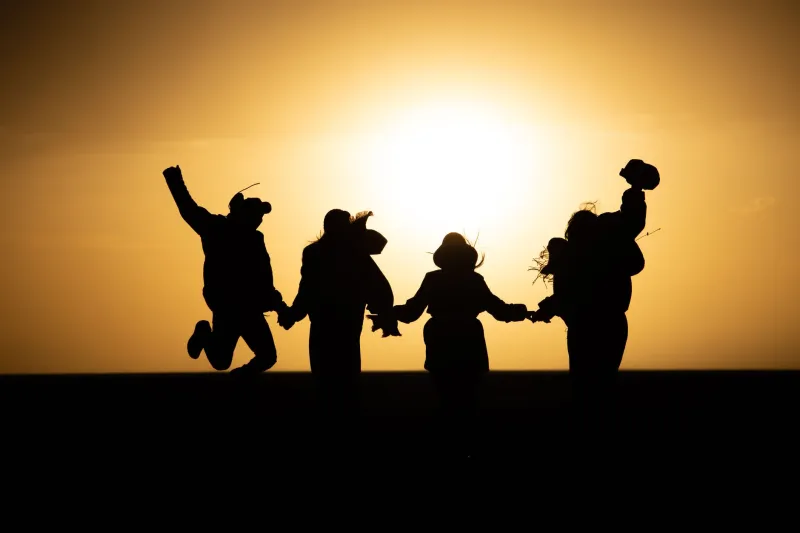
The whole spirit of this site — teo tsunaide kaerou, hold my hand, let's go home together — is about connection and return. But the characters who move us most are often the ones who had to open their fists before anyone could hold their hand.
You can't grip someone else's hand if you're already white-knuckling something you need to drop.
That's the quiet lesson these series keep offering us. Homecoming isn't just a direction. It's a state of readiness. And sometimes the bravest thing a character — or a person — can do is set something down, stand there empty-handed for a second, and wait to see what gets placed there instead.
These anime get that. And that's exactly why they stay with us.