You Don't Need a House to Have a Home: Anime's Most Unforgettable Chosen Families
You Don't Need a House to Have a Home: Anime's Most Unforgettable Chosen Families
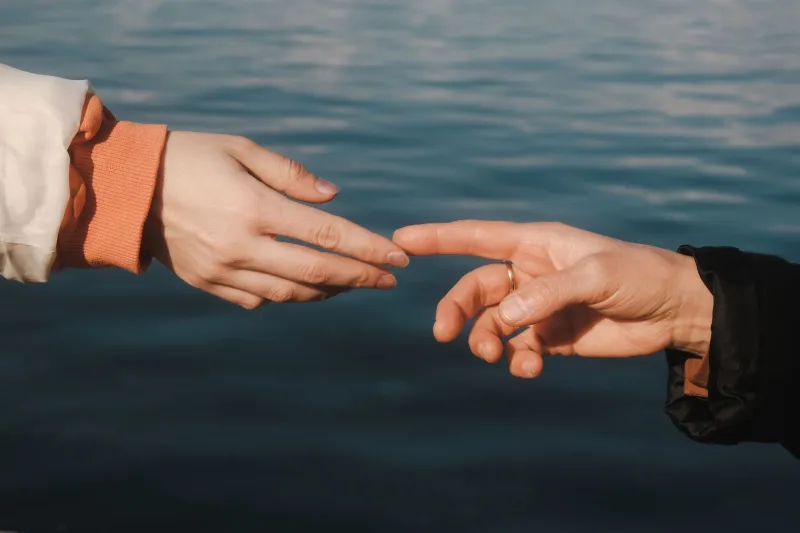
There's a reason the name of this site is what it is. Teo Tsunaide Kaerou — hold my hand, let's go home together. Not go back to your house. Not return to where you came from. Together. That word does a lot of heavy lifting, and honestly? So does anime.
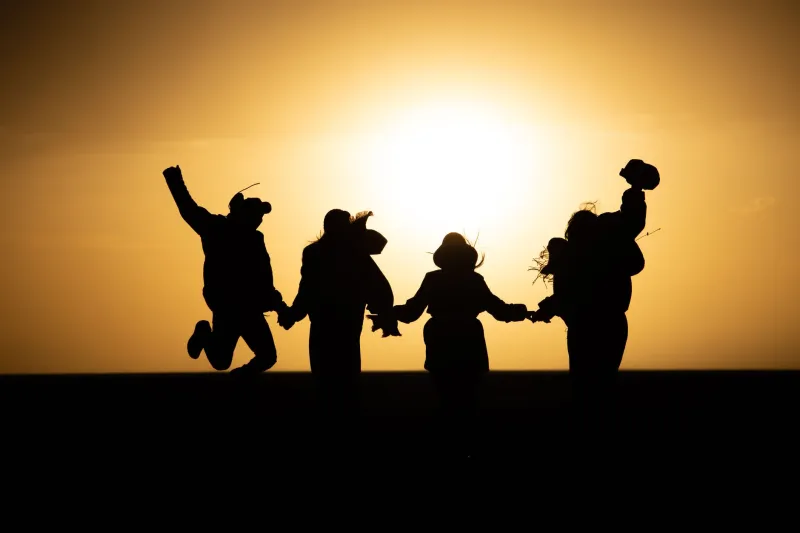
For a lot of us in the US, the word "family" is complicated. Maybe you grew up in a blended household, maybe your college friends became your actual people, maybe you found your tribe online before you ever found them in real life. Whatever your story is, there's a good chance an anime series saw you before you fully saw yourself — and handed you a mirror in the form of a ragtag group of misfits who chose each other anyway.
Let's talk about the series and characters that redefined what home actually means.
Edward Elric and the Truth He Learned Too Late (Then Just in Time)
Fullmetal Alchemist: Brotherhood is, at its core, a story about two brothers trying to get back what they lost. But here's the thing — Ed and Al's entire journey is scaffolded by people who weren't obligated to show up for them and did anyway. Winry Rockbell, who rebuilds Ed's automail with her own hands and her own grief. Izumi Curtis, who trained them while carrying her own impossible sorrow. Colonel Mustang, who moves chess pieces across a board just to keep them alive.
There's a moment late in the series — no spoilers if you somehow haven't finished it, but you know the one — where Ed makes a choice that has nothing to do with alchemy and everything to do with understanding that people are irreplaceable in a way that objects and abilities simply are not. He doesn't get his arm back because of a formula. He gets it back because someone loved him enough to offer something priceless.
That's the show's thesis hiding in plain sight: the real equivalent exchange was never about matter. It was about the people who stay.
Tohru Honda Walked Into a House Full of Strangers and Built a Home
If FMA is about learning that lesson through loss, Fruits Basket is about learning it through radical, almost painful gentleness.
Tohru Honda is one of the most quietly revolutionary protagonists in shojo history. She's not powerful. She doesn't have a special ability or a destiny. What she has is an almost terrifying capacity to love people without condition — and she walks into the Sohma family, a household defined by a curse that literally prevents physical closeness, and just... stays. She holds their hands anyway, even when it costs her something.
The Sohmas are a family by blood, but that blood is poison. What Tohru offers them is the opposite: a chosen bond that doesn't demand they be anything other than what they are. Kyo, in particular, spends most of the series convinced he deserves to be locked away from the people he loves. The arc of Tohru reaching for him anyway — not despite his damage but through it — is one of the most emotionally precise depictions of chosen family in any medium.
For American viewers who grew up in households where love felt conditional or performance-based, watching Tohru refuse to accept that framing is genuinely cathartic. She models something a lot of us had to figure out in therapy: that belonging isn't something you earn. It's something people offer, and something you're allowed to accept.
The Straw Hats Don't Have a Home Port — They Are Each Other's Home Port
One Piece has been running for over 25 years and somehow keeps finding new ways to gut-punch you with the same core idea. Luffy doesn't recruit crew members. He collects people who were already drowning and refuses to let go.
Think about Nami's arc on Cocoyasi Village. Or Robin's "I want to live" moment at Enies Lobby — which, if you weren't ugly-crying on your couch, I genuinely don't know what to tell you. Every single Straw Hat has a backstory defined by abandonment, loss, or displacement. And every single one of them finds Luffy, who is constitutionally incapable of understanding why anyone would choose to be alone.
What makes the Straw Hats work as a found family metaphor — especially for American fans — is that they're not unified by shared trauma alone. They have wildly different goals, personalities, and worldviews. Zoro and Sanji argue constantly. Usopp runs away sometimes. Chopper still gets star-struck. They are, in the most human way possible, a group of people who have absolutely no business working as a unit and yet are completely unthinkable apart.
Luffy's outstretched hand isn't a gesture of rescue. It's an invitation. Come be part of something. And the beauty of it is that he extends it before he knows anyone's backstory, before he understands what he's asking them to risk. He just knows he wants them with him.
That's it. That's the whole thing.
Why This Hits Different for American Fans Right Now
There's something worth naming here. In the US, the cultural myth of the nuclear family — two parents, shared bloodline, white picket fence, the whole package — has been quietly unraveling for decades. More people are living alone, more people are redefining kinship on their own terms, and more people are finding that the family they were born into can't always be the family that shows up.
Anime, particularly shonen and shojo series, has been telling chosen family stories for as long as the medium has existed. But the reason they resonate so hard with American audiences right now might be that we're in the middle of a cultural moment where those stories feel less like fantasy and more like instruction.
Edward Elric learning that some things matter more than getting back what you lost. Tohru Honda proving that love without condition is both possible and powerful. Luffy just... grabbing people's hands and refusing to let go.
These aren't just good stories. They're a kind of permission — to build your home out of people instead of places, out of choice instead of circumstance.
Hold the Hand That's Already Reaching for You
The site name isn't an accident. Teo tsunaide kaerou yo — let's hold hands and go home together. It's an invitation and a promise at the same time. And it's exactly what the best found family stories in anime keep offering us, episode after episode, arc after arc.
Home isn't a coordinate on a map. It's not a childhood bedroom or a family name. It's the person who shows up when you're at your worst and says, without hesitation: I'm still here. Let's go.
If you've got people like that in your life — blood or chosen, local or online — you already know what these series are talking about. And if you're still looking? Well. That's what the journey is for.