The Words We Can't Translate and the Community That Grew Around Them
At some point, almost every American anime fan has been stopped cold by a subtitle note. Something like: [Note: 'Natsukashii' has no direct English equivalent—roughly, a nostalgic longing for something in the past.] You read it. You think you understand. And then you realize you only sort of do, and the gap between sort of and actually is where things get interesting.
That gap is also, weirdly, where community lives.
The Moment the Translation Breaks Down
Let's start with natsukashii, since it comes up constantly in fan spaces. It's a word that describes a particular flavor of nostalgia—warm, bittersweet, oriented toward the past but not painful about it. The closest English approximation is probably 'nostalgic,' but that's not quite right. 'Nostalgic' implies distance. Natsukashii implies that the memory is somehow right here, present with you, even as it's gone.
When a character in Violet Evergarden or Anohana sits quietly with that feeling, you can sense it even without the word. But the word matters. And when fans go looking for it—when someone posts in a forum asking 'wait, what does natsukashii actually mean?'—something happens in the thread that wouldn't have happened if the translation had been clean and complete.
People gather around the question. They bring their own experiences. Someone says it's like the feeling you get driving past your childhood home. Someone else says it's like the smell of a specific food your grandmother used to make. Suddenly, a Japanese word has become a container for a dozen American experiences, and the people in that thread know each other a little better than they did before.
Untranslatability as a Feature, Not a Bug
Fan communities in the US have developed a genuinely sophisticated relationship with this kind of cultural opacity. It's not that we don't want things explained—we absolutely do, and subtitle notes, fan wikis, and YouTube deep-dives exist for exactly this reason. But there's a growing awareness that some things resist full explanation, and that the resistance is part of the point.
Take amae—roughly, the comfortable dependence you can have on someone who loves you unconditionally. It shows up in so many anime relationships as a kind of background warmth, the assumption that certain people are safe to be needy around. American culture tends to be suspicious of dependence; we prize self-sufficiency in ways that can make amae feel almost transgressive when you first encounter it.
For fans who grew up in households where emotional reliance was treated as weakness, watching characters openly, comfortably lean on each other—and watching the narrative treat this as healthy—can be quietly revelatory. And when they bring that revelation into fan spaces, it opens conversations that go way past plot discussion.
The Fandom Wiki Rabbit Hole Is a Love Language
There's a specific kind of American anime fan who has spent an unreasonable amount of time on fan wikis, not because they couldn't follow the story, but because they wanted to understand the texture of it. The honorifics. The regional accents that get flattened in subtitles. The specific social dynamics of a school club that only make sense if you know what a Japanese school club actually is.
This is its own form of fandom engagement, and it creates its own kind of intimacy. When you've both gone down the same rabbit hole—when you both know why a character's use of a certain pronoun is actually a character development moment—you share something. You've done the work together, even if you did it separately.
Reddit threads, Discord servers, and YouTube channels dedicated to exactly this kind of cultural unpacking have become some of the most vibrant spaces in US anime fandom. The Canipa Effect breaks down production details. Translators like the team behind NHK World's anime programming occasionally surface on social media to explain choices. Fan communities crowdsource understanding in real time.
None of this would exist if the translations were perfect. The friction is generative.
When 'I Don't Get It' Becomes the Beginning
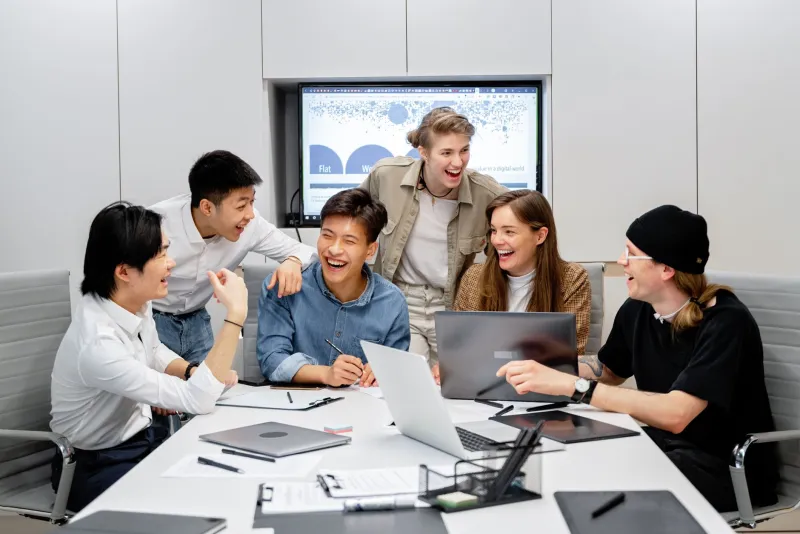
Here's the paradox at the center of all this: the things that are hardest to translate are often the things that create the strongest community bonds. Not because difficulty is inherently virtuous, but because shared confusion is a social act. You have to reach out. You have to say 'help me understand this.' And that's the beginning of a conversation.
The site name Teo Tsunaide Kaerou—hold my hand, let's go home together—is itself a small example of this. If you don't know what it means, you look it up, or you ask. And in asking, you've already started building something.
American fans who engage seriously with untranslatable anime concepts aren't just consuming content—they're developing a kind of cultural literacy that changes how they see their own language, their own emotional vocabulary, their own assumptions about what feelings are even nameable. That's a significant thing to get from a fandom.
The Community Built on 'Almost'
Perfect understanding was never really the goal. What fans are actually chasing—in the forums, in the Discord voice chats, in the comment sections under explainer videos—is enough understanding to feel the thing the show is trying to make you feel.
And somewhere in the gap between 'not quite' and 'almost,' a lot of genuine connection gets made. The people who've sat with the same untranslatable word, who've tried to explain mono no aware to a friend who hasn't seen 5 Centimeters per Second, who've argued about whether 'ganbatte' is better left untranslated—those people have something.
It's not fluency. It's something more interesting: a shared practice of reaching toward meaning together. Which, honestly, is what the best communities are built on anyway.