What Anime Taught Me About Sharing a Bathroom With Someone I Actually Like
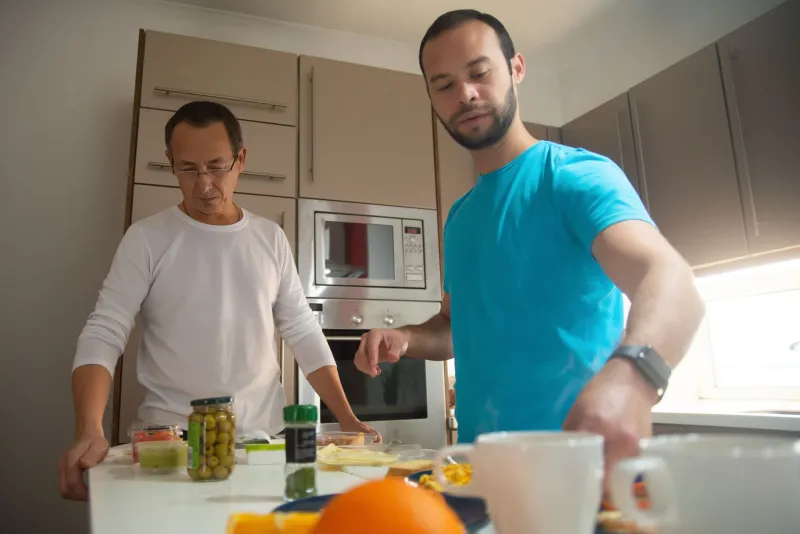
There's a moment in almost every cohabitation anime where someone walks into the kitchen at 7 a.m., half-awake, and finds the other person already there. Nobody says anything profound. Maybe there's toast. Maybe one of them is hogging the counter. And somehow, in that completely mundane beat, the show tells you everything about where these two people actually stand.
Anime has always had a soft spot for shared living situations. From classic slice-of-life setups to the more chaotic pairings you'd find in a shonen series, these stories keep returning to a specific question: what does it mean to let someone into your daily life, not just your heart?
For a lot of American fans, that question hits different once you've actually tried it.
The Fantasy vs. The 6 a.m. Reality
Here's the thing nobody tells you before you move in with someone you love: the romance doesn't disappear, but it does have to share a closet with the version of you that leaves dishes in the sink.
Anime gets this. Series like Wotakoi: Love Is Hard for Otaku are genuinely useful here—not because they're instructional, but because they show two people who are deeply fond of each other also being deeply annoying to each other on a regular basis. Narumi and Hirotaka aren't navigating some dramatic falling-out; they're navigating who buys the shampoo and whether it's okay to game until 2 a.m. when you both have work in the morning. That's the real stuff.
The fantasy version of cohabitation—the montage of cooking together, the cute matching pajamas—is something anime can sell as well as any Hollywood rom-com. But the better series linger past the montage. They show you the morning after the argument neither person wanted to have. They show you the quiet negotiation of two people whose habits don't perfectly align trying to figure out how to want the same things.
Vulnerability Has a Floor Plan
One of the most interesting things anime does with shared living is use physical space as emotional shorthand. A character who keeps their room immaculately organized but leaves the shared living area a disaster is telling you something. A character who cooks elaborate meals but never eats them alone is telling you something else.
Fruits Basket does this beautifully, even though it's not technically a cohabitation story in the traditional sense. The Sohma house—and later Tohru's presence within it—becomes a study in how space either opens or closes depending on who's allowed inside it. Tohru's willingness to simply be there, consistently and without judgment, rewires how the people around her understand what home can feel like.
That's not a small thing to dramatize. A lot of us grew up in homes where presence wasn't safe, or where the people you lived with were unpredictable. Watching characters slowly trust the permanence of someone sharing their space—watching them stop flinching every time a door opens—can be quietly, unexpectedly moving.
The Compromise Nobody Warned You About
Let's talk about My Love Story!! for a second. Takeo and Yamato are one of the most wholesome pairings in shoujo history, and part of what makes them work is that they are genuinely different people who have to keep choosing each other through those differences. Takeo is enormous and boisterous; Yamato is gentle and precise. They don't merge into one personality. They stay themselves and figure out how to share a life anyway.
That's the compromise nobody warns you about. It's not about giving things up. It's about maintaining your own shape while making room for someone else's.
Anime is actually pretty good at modeling this, especially in series that take the long view on relationships. The couples and found-family units that feel most real aren't the ones who finish each other's sentences—they're the ones who've clearly had the same argument three times and landed somewhere workable.
What 'Coming Home' Actually Looks Like
The site's name—Teo Tsunaide Kaerou, hold my hand, let's go home together—captures something that a lot of cohabitation anime is quietly about. Home isn't a place you arrive at. It's something you build, incrementally, with the person who's willing to show up to the project every single day.
That sounds romantic. And it is, sometimes. But it's also deeply practical. It's about who takes out the trash and who notices when the other person is having a hard week and who learns, eventually, to ask for what they need instead of hoping it gets guessed.
Anime has given American fans a whole vocabulary for this—the uchi (inside, private self) versus soto (public-facing self) dynamic that shows up in so many relationship arcs, the slow process of being allowed into someone's unguarded spaces. We don't always have those words in English, but we recognize the feeling.
The Lesson, If There Is One
If cohabitation anime teaches us anything, it's that the people worth coming home to are the ones who don't require you to perform. The ones who've seen you at 6 a.m. with bad hair and a worse attitude and showed up to the kitchen anyway.
That's not glamorous content. But it's the kind of thing that, once you've found it, you'd hold onto pretty tight.
And maybe that's exactly why we keep watching these shows—not because they make cohabitation look easy, but because they make it look worth it.