No Passport Required: How Anime Fandom Built a Home Between the Miles
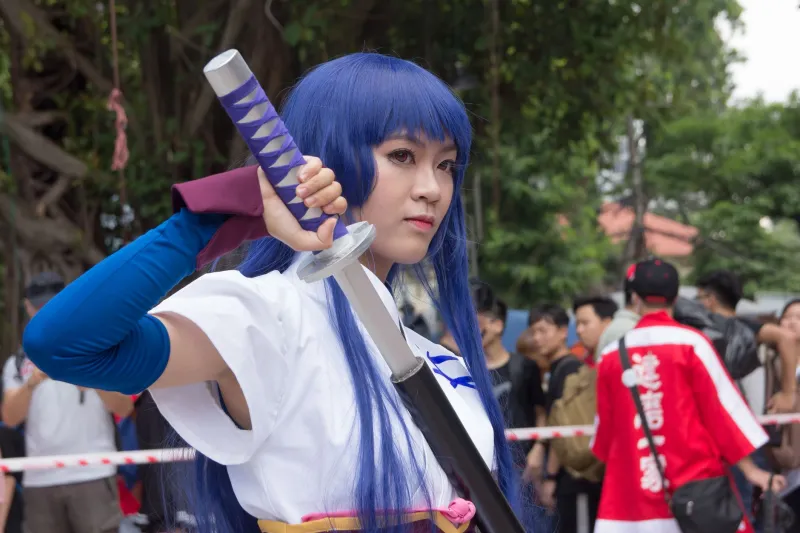
Somewhere in the middle of a convention center in Atlanta, or a Discord server that runs on Pacific time but has members in Ohio, Texas, and rural Vermont, something real is happening. People who have never met in person are finishing each other's sentences about a scene from an anime that aired in Japan six months ago. Someone is crying at a cosplay they recognize. A group of strangers is arguing with the specific, comfortable intensity of people who have known each other for years.
This is the American anime fan community. And for a lot of people inside it, it's the closest thing they have to a place that feels like theirs.
The Geography of Fandom
Let's be honest about something: a lot of us came to anime feeling like we didn't quite fit the spaces we were physically in. That's not a universal experience, but it's a common enough one that it's worth naming. Anime fandom in the US, especially before streaming made it mainstream, was often the territory of people who were looking for something their immediate environment wasn't offering.
Maybe it was the storytelling. The emotional register. The willingness to sit with grief or ambiguity or transformation in a way that American media often sidesteps. Whatever the entry point, a lot of fans found that the community around the art felt more honest than a lot of communities they'd encountered elsewhere.
And then the internet happened, and those scattered pockets of fans found each other.
What Online Spaces Actually Built
The early anime fan forums of the late 90s and early 2000s are legendary for a reason. They were genuinely formative spaces — not just for fandom, but for the people who grew up in them. You learned how to write in those forums. You learned how to argue. You learned how to be vulnerable about something you cared about without getting demolished for it.
That culture carried forward. The Discord servers and subreddits and Twitter threads that host anime conversation today are inheritors of something that was built deliberately, over decades, by people who understood that the community was the point — not just the content.
A fan who watches an episode of Demon Slayer alone in their apartment in Des Moines and then immediately joins a live watch-along thread isn't just consuming media. They're participating in a ritual. The shared experience of watching the same thing at the same time, or discussing it in the same space, creates a kind of temporal and emotional geography. A place that exists in attention and feeling rather than coordinates.
Conventions and the Annual Pilgrimage
Anime Expo. Otakon. Anime NYC. These aren't just events — they're homecomings. Ask anyone who attends annually and they'll describe it in terms that sound less like a convention and more like a reunion. "I only see these people once a year, but they're some of my closest friends." You'll hear that sentence, or a version of it, constantly.
There's something worth examining in the convention experience specifically, because it's one of the few places where the online geography becomes physical, even briefly. The Discord server becomes a group of people in a hotel lobby. The Twitter mutuals become someone in line at the artist alley. The parasocial becomes social.
And then it ends, and everyone goes back to their separate physical lives — but the map of belonging they carry with them is a little more solid for having been made real, even temporarily.
The Paradox at the Center
Here's the tension that's worth sitting with: there's something genuinely strange about feeling most at home in spaces organized around art from a culture that isn't yours. American anime fans are engaging with Japanese storytelling, Japanese aesthetics, Japanese emotional frameworks — and building their sense of identity and community around those things.
Is that appropriation? Is it appreciation? Is it just what culture does — travel, transform, take root somewhere new?
The answer is probably all three, depending on the context and the care taken. The healthiest anime communities in the US are the ones that hold that tension consciously. They love the art deeply and they stay curious about its origins. They celebrate what resonates without pretending it belongs to them in a way it doesn't.
The site name Teo Tsunaide Kaerou — hold my hand, let's go home together — carries that dual awareness in its bones. It's a Japanese phrase, held by an English-speaking audience, reaching toward something that doesn't have a clean translation. That gap isn't a problem. It's the whole conversation.
What It Reveals About Modern Identity
The phenomenon of finding home in a fandom space isn't unique to anime, but anime does it with a particular intensity. Part of that is the depth of the storytelling — these are series that ask big questions about belonging, sacrifice, chosen family, and what we owe each other. When you find a community that cares about those questions as much as you do, of course it feels like home.
But part of it is also something specific to this moment in American cultural life. Physical communities — neighborhoods, churches, local institutions — have been fraying for decades. The places where people used to find connection have thinned out or disappeared. And in that vacuum, people have built new ones, often organized around shared passion rather than shared geography.
Anime fandom is one of the most successful versions of that project. It produced communities with genuine care structures — people who show up for each other, who notice when someone goes quiet, who celebrate each other's milestones. The parasocial became personal. The screen became a window became a door.
Holding Hands Across the Distance
At the end of it, here's what we believe: the home you find in a fandom community is real. It counts. The friendships made over episode discussions and convention floors and late-night Discord spirals are not lesser for having started online or having been organized around a cartoon.
They are, in many cases, the realest thing some people have.
The world keeps getting bigger and more complicated and more isolating in ways that are genuinely hard to navigate. The communities that form around loving something deeply — that hold hands across time zones and language barriers and cultural distance — are doing something important.
They're figuring out how to go home together, even when home is somewhere none of them have ever been.