Furusato, Ie, and the Place Your Heart Calls Home: What Anime Taught American Fans About Belonging
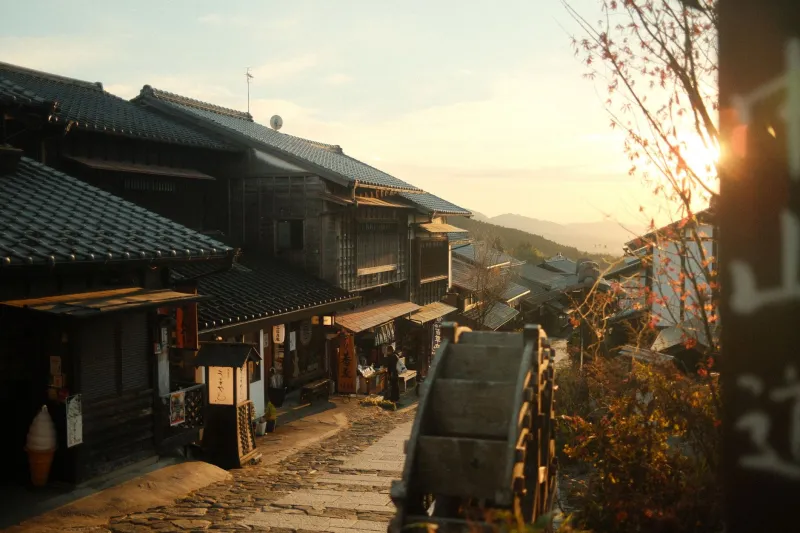
There's a moment in almost every great anime where a character stands somewhere — a train platform, a childhood bedroom, the edge of a field at dusk — and feels something so specific and so heavy that no single English word really covers it. American viewers feel it too, even if they can't name it. That gap between feeling and language is actually the whole point.
Japanese has several words that orbit the idea of "home" without ever landing exactly on the Western version of it. Furusato roughly means hometown or ancestral home, but it carries nostalgia and longing baked right into its bones — it's not just where you're from, it's the place you ache for. Ie refers to household or family unit, but with a weight of obligation and continuity that the English word "home" doesn't quite carry. And then there's kokoro no basho — the place of the heart — which isn't a physical location at all. It's wherever you feel most fully yourself.
Anime navigates all three of these, often in the same series, sometimes in the same episode. And for American fans who grew up with a very different cultural script about what home is supposed to look like, that navigation can be genuinely revelatory.
The American Idea of Home vs. What Anime Is Actually Saying
In a lot of American storytelling, home is something you build. You work hard, you earn your place, you plant your flag. The frontier mythology runs deep — home is a destination, a reward, something you construct through individual effort. Even when American stories get nostalgic about home, there's usually a bootstrapping quality to it. You left, you struggled, you came back stronger.
Anime tends to complicate that. Natsume's Book of Friends doesn't frame Natsume's search for belonging as something he earns. It's something he slowly, tentatively allows. The warmth of the Fujiwara household doesn't arrive because Natsume deserved it or fought for it — it arrives because people chose to extend it, and he learned, painfully slowly, to accept it. That's a fundamentally different emotional architecture than most Western coming-of-age stories offer.
Or look at Violet Evergarden, which treats the concept of home almost entirely through correspondence — letters that carry pieces of people across distance. Home there isn't a building or even a family. It's the act of being understood by someone else. The ie structure is almost absent. What replaces it is connection, fragile and deliberate.
For American viewers who grew up in non-traditional households, or who moved constantly, or who never quite fit the Norman Rockwell image of what family life was supposed to look like, these alternatives aren't just interesting. They're a relief.
Furusato and the Ache That Doesn't Have a Name
One of the trickiest things about furusato is that you don't have to have actually lived somewhere to feel it. It can be a place you only visited once, or a place you've only seen in photographs, or — and this is where anime gets genuinely strange and beautiful — a place that doesn't exist at all.
Mushishi builds its entire emotional world on this. Ginko drifts. He can't stay anywhere because his presence draws dangerous spirits. But every episode is soaked in a kind of bittersweet longing for rootedness, for the villages and landscapes he passes through and leaves behind. The show isn't sad, exactly — it's suffused with something more complicated. Viewers who've relocated a lot, or who feel culturally unmoored, often describe Mushishi as one of the most emotionally accurate shows they've ever watched, even though nothing in it resembles their actual lives.
That's furusato doing its work. It's the homesickness for somewhere you can't quite locate.
Chosen Family, Ie, and the Weight of Obligation
Western audiences have really warmed up to the "chosen family" trope in recent years — it's all over prestige TV, YA fiction, superhero movies. But the anime version of chosen family often carries something the Western version tends to soften: a sense of duty that runs alongside the love.
In Fruits Basket, Tohru Honda's relationships with the Sohma family aren't just emotionally warm — they come loaded with responsibility, history, and the specific kind of pain that comes from being bound to people whether you want to be or not. The ie framework is right there, bending and straining under the weight of a curse that's really just a metaphor for inherited family dysfunction. American audiences who come from complicated family situations often find this more honest than stories where chosen family is purely joyful and uncomplicated.
There's something true in the anime version: the people you love most are often also the people who make things hardest. Home isn't always comfortable. Sometimes it's just the place where you're known.
When Fandom Becomes the Kokoro no Basho
Here's the part that feels most personal, and maybe most relevant to why a site like this one exists at all.
A lot of American anime fans — especially those who found the medium during adolescence — will tell you that fandom itself became a kind of home before they had the language to describe why. The communities, the message boards, the conventions, the late-night Discord calls about whether a certain scene in a certain episode actually meant what you thought it meant. That's kokoro no basho in action. The place of the heart. It's not geographic. It's relational.
Anime, maybe more than any other medium, invites this kind of attachment because it's so unashamed about its own emotional vocabulary. It will stop the plot to let a character stand in the rain and feel something. It will spend three episodes on a conversation that could have been one scene. It makes space for the interior life in a way that American mainstream entertainment often doesn't, and that space is where a lot of fans quietly built their sense of self.
The name of this site — teo tsunaide kaerouyo, hold my hand and let's go home together — points directly at this. It's not "let's go home." It's "let's go home together." The togetherness is the whole thing. The hand-holding is the destination.
What Gets Lost, What Gets Found
Something does get lost when anime crosses the Pacific. Localization decisions, cultural context, the specific texture of a Japanese neighborhood at twilight — none of that fully survives the journey. That's real, and it's worth acknowledging.
But something gets found, too. American fans who lean into the untranslatable parts of anime — who sit with furusato and ie and kokoro no basho instead of flattening them into familiar Western shapes — often come out the other side with a more expansive understanding of what it means to belong somewhere. They discover that home doesn't have to be a place you were born, or a family you didn't choose, or a life that matches the one you were supposed to want.
It can be a feeling. It can be a community. It can be a story that saw you clearly, even from across an ocean and a language barrier.
That's not a small thing. That might actually be everything.