The Rituals That Make Fandom Feel Like Coming Home
It's 11 PM on a Thursday and somewhere in Ohio, a Discord server is losing its collective mind because someone just got to that scene in Clannad: After Story. In California, a group chat is coordinating matching outfits for an Anime Expo meetup that's still four months away. In a New York apartment, two roommates who met at a panel three years ago are doing their annual rewatch of Fullmetal Alchemist: Brotherhood, synchronized down to the pause breaks.
None of this was in any official fandom handbook. Nobody organized a committee to decide that these things should happen. They just... emerged. Organically, stubbornly, joyfully. And if you've been part of the American anime community for any real length of time, you probably have your own version of these moments — your own rituals, your own traditions, your own proof that this thing you love has built something around you that functions a whole lot like a home.
That's what we want to celebrate today.
The Seasonal Rewatch: A Calendar Built Around Story
There's something almost liturgical about the way dedicated anime fans return to certain series at certain times of year. Watch any anime community long enough and you'll notice the patterns: Ano Hi Mita Hana gets rewatched every summer. Toradora comes back every December without fail. Mushishi gets its annual autumn pilgrimage. Non Non Biyori is basically spring cleaning for the soul.
These aren't just viewing habits. They're rituals in the truest sense — repeated actions that carry accumulated meaning. When you rewatch Toradora in December, you're not just watching it alone. You're watching it alongside every version of yourself that has ever watched it in December before, and alongside thousands of other fans doing the same thing simultaneously, most of whom you'll never meet.
That's a kind of communion. It's also, if we're being honest, a little bit magical.
Convention Culture and the Annual Homecoming
For a huge portion of American anime fans, conventions aren't just events. They're homecomings.
AX, Otakon, Anime Boston, Sakura-Con, Colossalcon — these aren't just places where you buy merch and get autographs (though, yes, obviously, also that). They're the places where the people you've spent all year talking to online suddenly become three-dimensional. Where the Discord friend group becomes a real group, standing in a hotel lobby at midnight, too tired and too happy to go to sleep.
The rituals around convention attendance have become incredibly elaborate in their own right. The pre-con outfit coordination threads. The group cosplay planning that starts approximately nine months in advance. The traditional dinner spot that your crew has gone to every year for five years. The panel you attend every single time even though you've heard the same jokes from the same host before — because that's the point.
Conventions, at their best, are proof that the community is real. They're the physical evidence that you didn't imagine any of it.
The Watch Party as Living Room Expansion
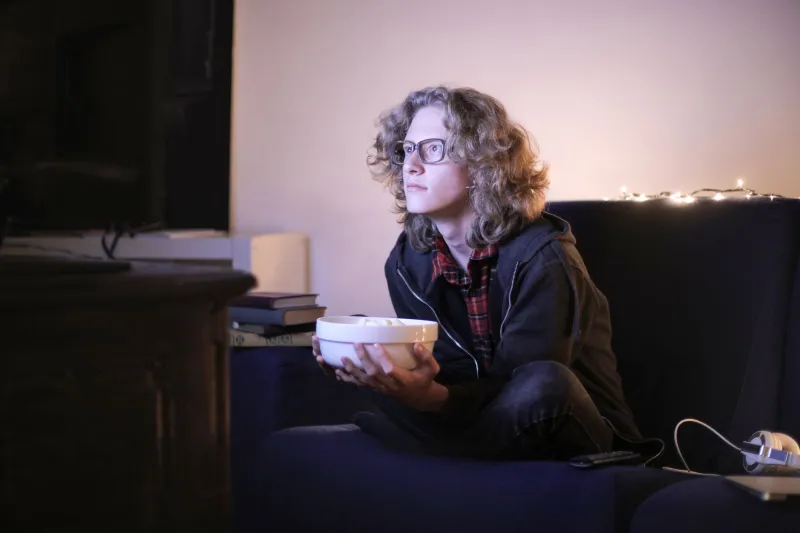
Before streaming platforms built watch party features into their interfaces, anime fans had already figured it out. Synchronized streams with IRC chat. Cytube rooms. Discord stage channels. The technology kept changing; the impulse never did.
There's something specifically comforting about watching anime with other people in real time, even when those people are spread across a dozen time zones. The collective gasp when a plot twist lands. The wall of crying emojis during a devastating scene. The person who has already seen it and is just posting a single dot, waiting, knowing what's coming.
Watch parties turn viewing into an event, and events create memories, and memories are what rituals are made of. A lot of American fans can tell you exactly where they were and who they were watching with when they saw a particular scene for the first time — not because they wrote it down, but because shared experience embeds itself differently than solitary experience does.
Fan Art, Fic, and the Ongoing Conversation
Here's a ritual that doesn't get enough credit: creation as community maintenance.
Fan artists and fanfic writers are doing something that looks like a hobby but functions more like correspondence. When someone posts a piece of fan art on a Tuesday morning, they're sending a signal into the community: I was thinking about this. Were you? And the replies — the reblogs, the comments, the tags that turn into essays — are the community writing back.
This ongoing creative conversation is how fandoms stay alive between seasons, between announcements, between anything official happening at all. It's self-sustaining in a way that's genuinely remarkable. The community generates its own warmth.
Why Any of This Matters
America is a big country. A lot of anime fans grew up in places where nobody else in their school watched the same things they did, cared about the same characters, felt the same specific feeling when the right piece of music hit at the right moment in an episode. Fandom was, for a lot of us, the first place we found people who just got it without needing an explanation.
The rituals that have built up around anime fandom in the US aren't incidental. They're the community actively working to preserve and transmit that feeling — the feeling of not being alone in something that matters to you. They're how a dispersed, diverse, continent-wide group of people keeps finding its way back to each other.
That's not just community. That's home. And we're really glad you're here.